
Constitutional & Public Law

Constitutional Litigation

Constitutional litigation concerns the enforcement of fundamental rights and challenges to the validity of laws and government action. These matters are brought by writ petitions in the High Courts under Article 226, or in the Supreme Court under Article 32.

Matters handled

Fundamental rights
Enforcement of the rights to equality (Article 14), the freedoms under Article 19, life and personal liberty (Article 21), and other rights in Part III.
Validity of legislation
Challenges to Central and State laws on the ground that they exceed legislative competence or violate fundamental rights.
Executive and administrative action
Challenges to decisions that are arbitrary, discriminatory or taken without the authority of law.
Public interest litigation
Petitions on matters affecting the public or people unable to approach the court themselves. Courts relax the rules of standing but examine the petitioner’s bona fides.
Personal liberty
Habeas corpus petitions against unlawful detention, including preventive detention.
Religious and cultural rights
Matters under Articles 25 to 30 concerning freedom of religion and the rights of religious and cultural communities.

How proceedings typically run

  1. Identify the right and the respondent A fundamental rights petition ordinarily lies against the “State” as defined in Article 12, which includes government bodies and their instrumentalities.
  2. Choose the forum Article 32 is itself a fundamental right, but where Article 226 offers an effective remedy the Supreme Court often asks the petitioner to approach the High Court first.
  3. Drafting The petition sets out the facts, the right infringed, the grounds and the relief sought, with supporting documents.
  4. Notice and pleadings If the court issues notice, the State files its counter-affidavit and the petitioner may reply.
  5. Hearing and judgment Final arguments, followed by the court’s decision and, where granted, the writ or declaration.

Documents usually needed

  • The law, notification, order or action challenged
  • Representations made to the authority and any reply
  • Documents showing how the petitioner is affected

Please do not send original documents or confidential material through this website. Documents are reviewed only after the chamber has agreed to consider a matter.
Watch

Constitutional & Public Law · In Hindi

Article 21 and the leading constitutional cases on it

The right to life and personal liberty under Article 21 of the Constitution, and the important cases that have shaped it.

Watch on YouTube (external site)

Constitutional & Public Law · In Hindi

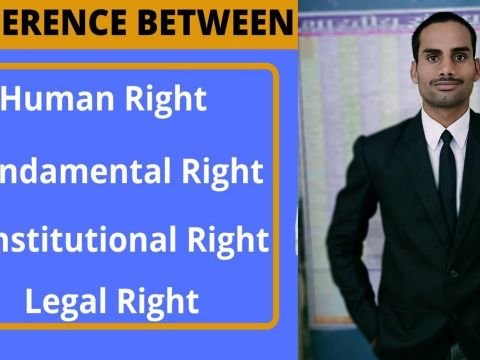
Fundamental, constitutional, legal and human rights: the differences

How fundamental rights differ from other constitutional rights, ordinary legal rights and human rights.

Watch on YouTube (external site)

Common questions

Can a petition go directly to the Supreme Court?

Yes. Article 32 guarantees the right to move the Supreme Court for enforcement of fundamental rights. In practice the Court may decline to entertain a petition where the High Court is an effective forum.

Can fundamental rights be enforced against private persons?

Most fundamental rights operate against the State. A few, such as Articles 15(2), 17 and 23, also apply to private persons.

Related areas

General information only, not legal advice. The law stated is subject to change; reviewed by Hanmat Lodhi Advocate.

Professional enquiries

Contact the chamber

Enquiries are received by telephone and at the chamber. Please do not send confidential documents through this website or social media.

WhatsApp +91 90744 09228 (opens WhatsApp) Call +91 90744 09228

Before you continue

Disclaimer

The Bar Council of India does not permit advocates to advertise or solicit work. By proceeding, you confirm that you are seeking information about Hanmat Lodhi Advocate of your own accord, that there has been no advertisement, solicitation, invitation or inducement of any sort, and that nothing on this website constitutes legal advice or creates an advocate–client relationship.

Read the full disclaimer.