Civil, Criminal & Pre-Litigation

Criminal Litigation

Criminal proceedings in India are governed by the Bharatiya Nyaya Sanhita, 2023 (BNS), the Bharatiya Nagarik Suraksha Sanhita, 2023 (BNSS) and the Bharatiya Sakshya Adhiniyam, 2023, in force from 1 July 2024. Matters concerning earlier offences, or proceedings already pending on that date, may continue under the Indian Penal Code and the Code of Criminal Procedure.

Matters handled

Anticipatory bail
Applications under Section 482 of the BNSS to the Court of Session or the High Court for a direction that the applicant be released on bail if arrested.
Regular bail
Bail applications before the Magistrate, the Court of Session and the High Court after arrest.
Quashing
Petitions to the High Court under Section 528 of the BNSS to quash an FIR or proceedings that disclose no offence or amount to an abuse of process.
Trials
Defence at the stages of charge, prosecution evidence, defence evidence and final arguments.
Private complaints
Complaints to the Magistrate where the police have not acted, and proceedings on those complaints.
Cheque dishonour
Complaints and defence under Section 138 of the Negotiable Instruments Act, 1881.
Appeals and revisions
Appeals against conviction, sentence or acquittal, and revisions against orders of criminal courts.

How proceedings typically run

  1. Review of the FIR or complaint What is alleged, which provisions are invoked, and whether they are bailable or non-bailable.
  2. Remedies at the arrest stage Anticipatory bail, compliance with notices to appear, or regular bail after arrest.
  3. Investigation and report The police investigate and file a final report (charge-sheet or closure report) before the Magistrate.
  4. Charge and trial The court frames charges if a case is made out; evidence is then led and tested.
  5. Judgment and appeal Judgment of acquittal or conviction, followed by any appeal or revision.

Documents usually needed

  • Copy of the FIR or complaint
  • Any notice received from the police
  • Bail orders, charge-sheet and court orders, where available
  • Documents supporting the defence

Please do not send original documents or confidential material through this website. Documents are reviewed only after the chamber has agreed to consider a matter.
Watch

Criminal Law · In Hindi

Facing a false FIR: the legal remedies

The steps to take when a false FIR has been registered, and the legal remedies available to the person named in it.

Watch on YouTube (external site)

Criminal Law · In Hindi

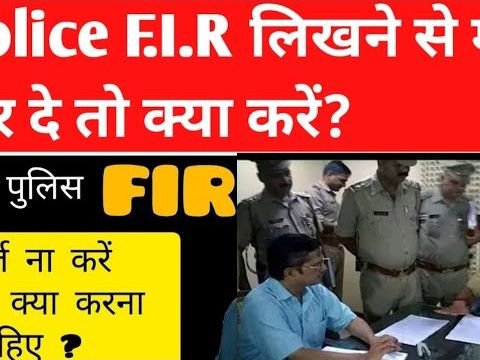
When the police refuse to register an FIR

What a complainant can do if the police do not register an FIR, and the remedies available under the law.

Watch on YouTube (external site)

Common questions

What is anticipatory bail?

A direction by the Court of Session or the High Court under Section 482 of the BNSS that, in the event of arrest, the person be released on bail. Conditions may be imposed.

When can an FIR be quashed?

The High Court may quash an FIR in limited circumstances, for example where the allegations, taken at face value, disclose no offence, or where the proceedings are an abuse of process. The Supreme Court summarised these categories in State of Haryana v. Bhajan Lal (1992).

Related areas

General information only, not legal advice. The law stated is subject to change; reviewed by Hanmat Lodhi Advocate.

Professional enquiries

Contact the chamber

Enquiries are received by telephone and at the chamber. Please do not send confidential documents through this website or social media.

WhatsApp +91 90744 09228 (opens WhatsApp) Call +91 90744 09228

Before you continue

Disclaimer

The Bar Council of India does not permit advocates to advertise or solicit work. By proceeding, you confirm that you are seeking information about Hanmat Lodhi Advocate of your own accord, that there has been no advertisement, solicitation, invitation or inducement of any sort, and that nothing on this website constitutes legal advice or creates an advocate–client relationship.

Read the full disclaimer.